2026 · Scheduling, booking & event management platform
CALERA
A modern scheduling platform that simplifies appointment booking, availability management, calendar synchronization, and event registration through a unified, customizable experience.
- Year01
- 2026
- Role02
- Product design & engineering · Independent project
- Tools03
- Next.js · React · SCSS · Zustand · Radix UI · Supabase · Google Calendar API
- Type04
- Product Design · Frontend Engineering · Next.js · Scheduling · SaaS · Design Systems
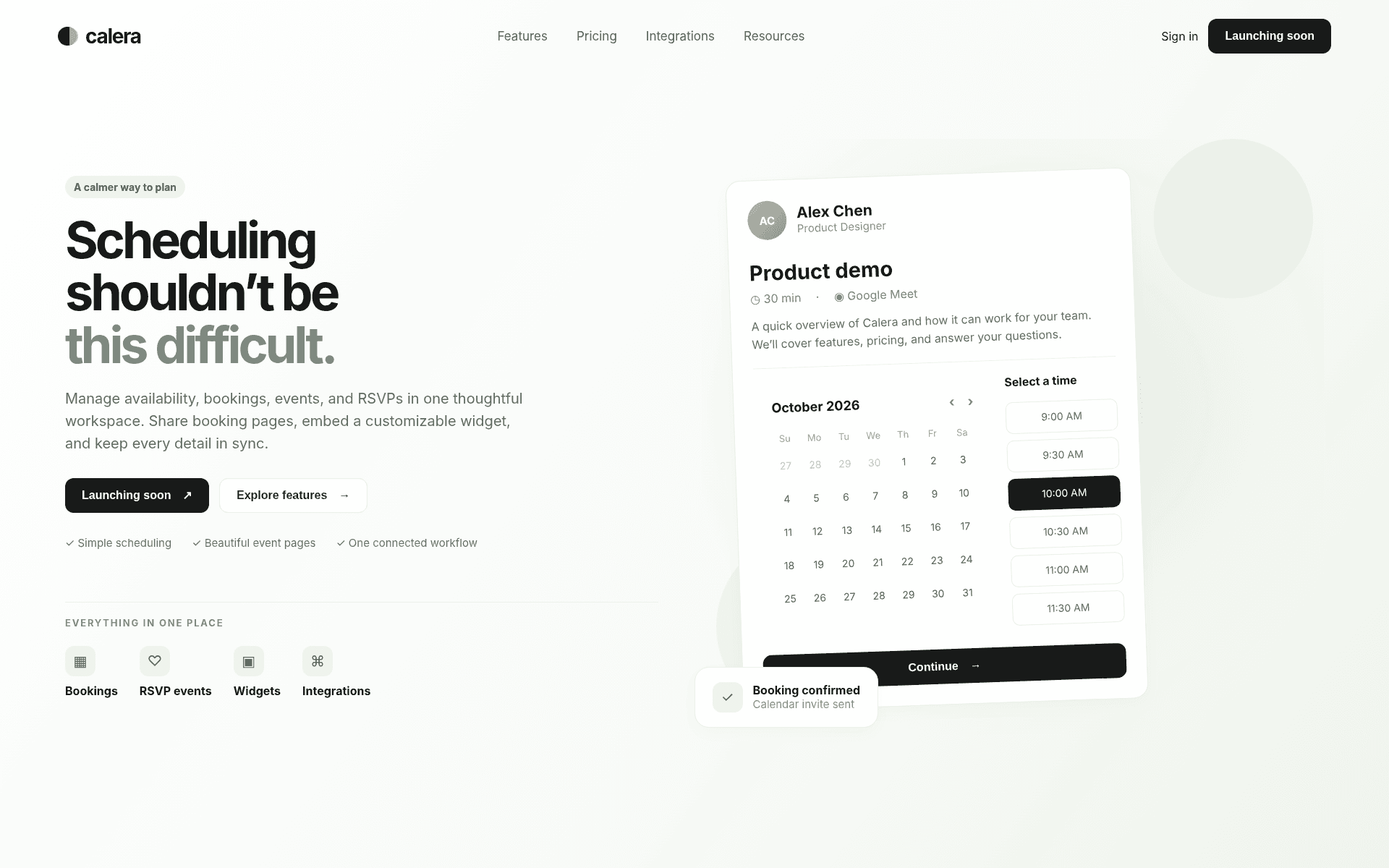
Calera started with a simple idea: scheduling should feel effortless. Booking a meeting, managing availability, or organizing an event shouldn't require navigating a collection of disconnected tools. I wanted to build a platform that brings these experiences together in one cohesive, thoughtfully designed product.
The goal was to create a scheduling platform that feels lightweight and intuitive on the surface, while providing the flexibility and functionality needed behind the scenes. From individual professionals managing their calendars to teams coordinating meetings and couples organizing events, Calera is designed to make the entire process feel simpler.
What it does
Calera combines appointment scheduling, calendar management, embeddable booking widgets, and event registration in a single platform.
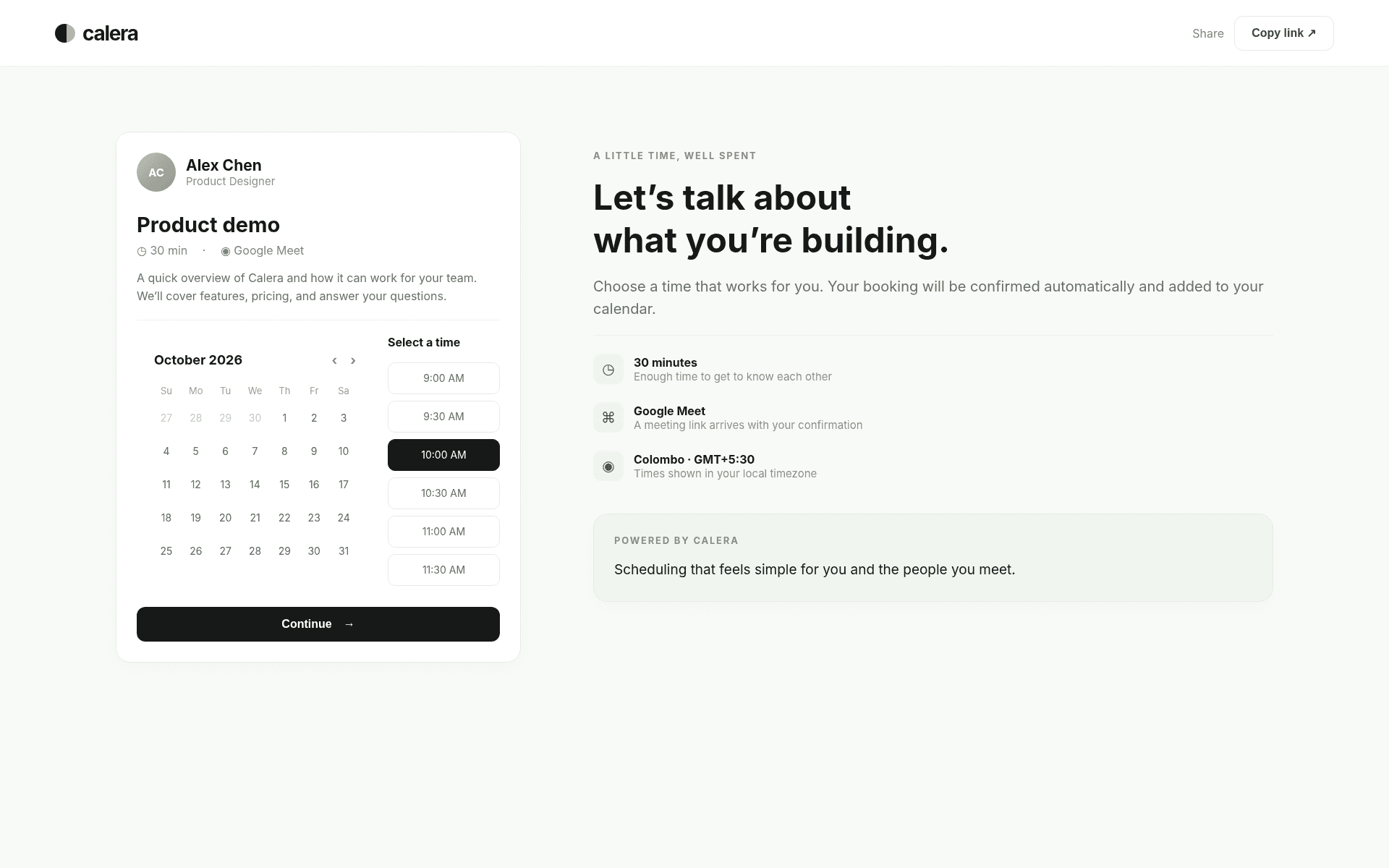
Users can create customizable booking pages, define their availability, manage appointments, and share public booking links. Visitors can select a convenient time without the usual back-and-forth communication. Google Calendar integration helps keep schedules synchronized, while automated email notifications keep participants informed.
The platform also includes a separate RSVP experience for events, allowing organizers to publish event pages, share invitations, and collect responses through an email-based verification flow.
The experience
The central challenge was making a feature-rich scheduling product feel simple. I focused on clear information hierarchy, predictable interactions, and reusable interface patterns that make everyday tasks easy to understand.
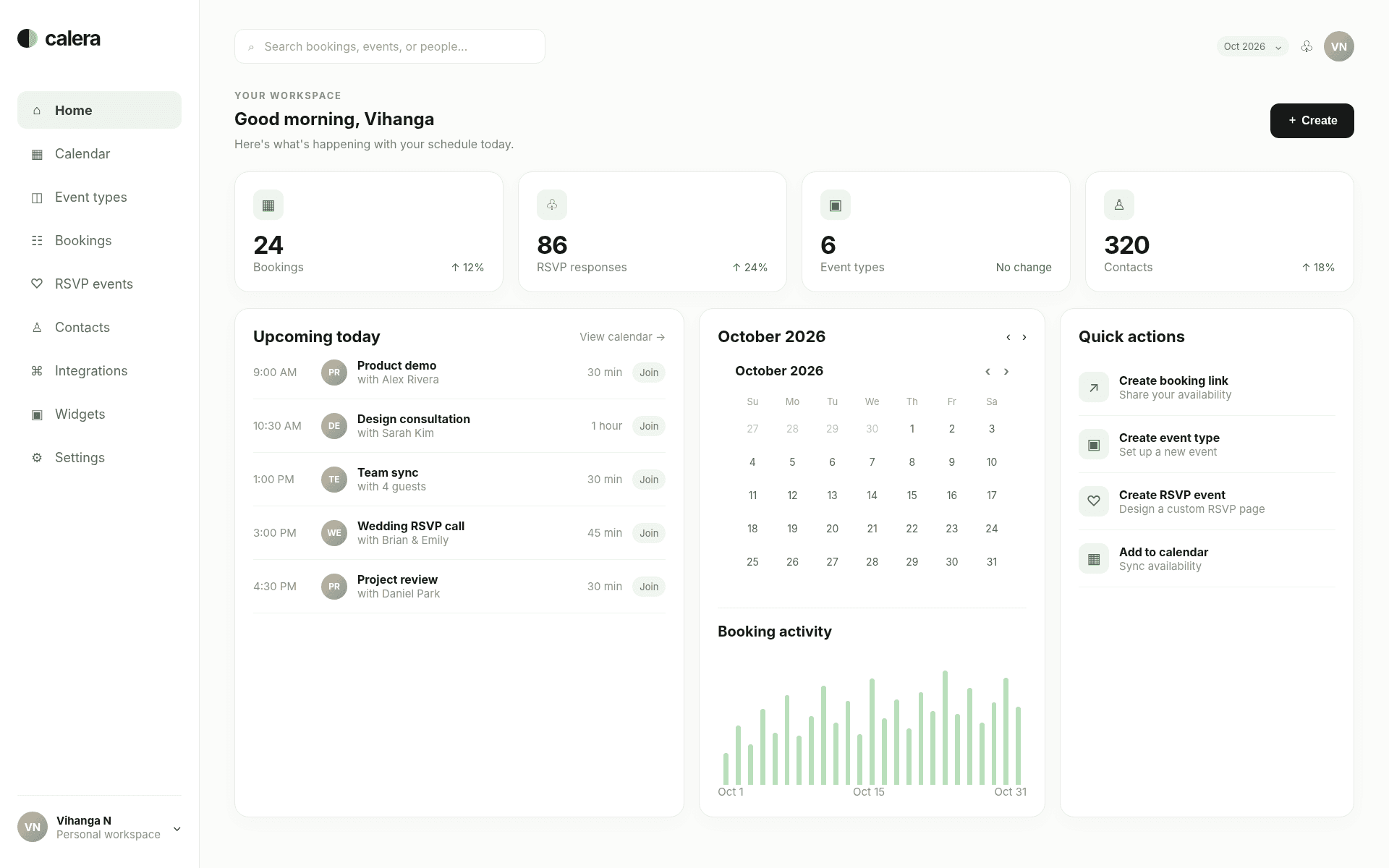
The dashboard brings upcoming bookings, key metrics, recent activity, and quick actions into one place. Booking management follows a straightforward flow, from creating an event type and setting availability to reviewing, rescheduling, or cancelling appointments.
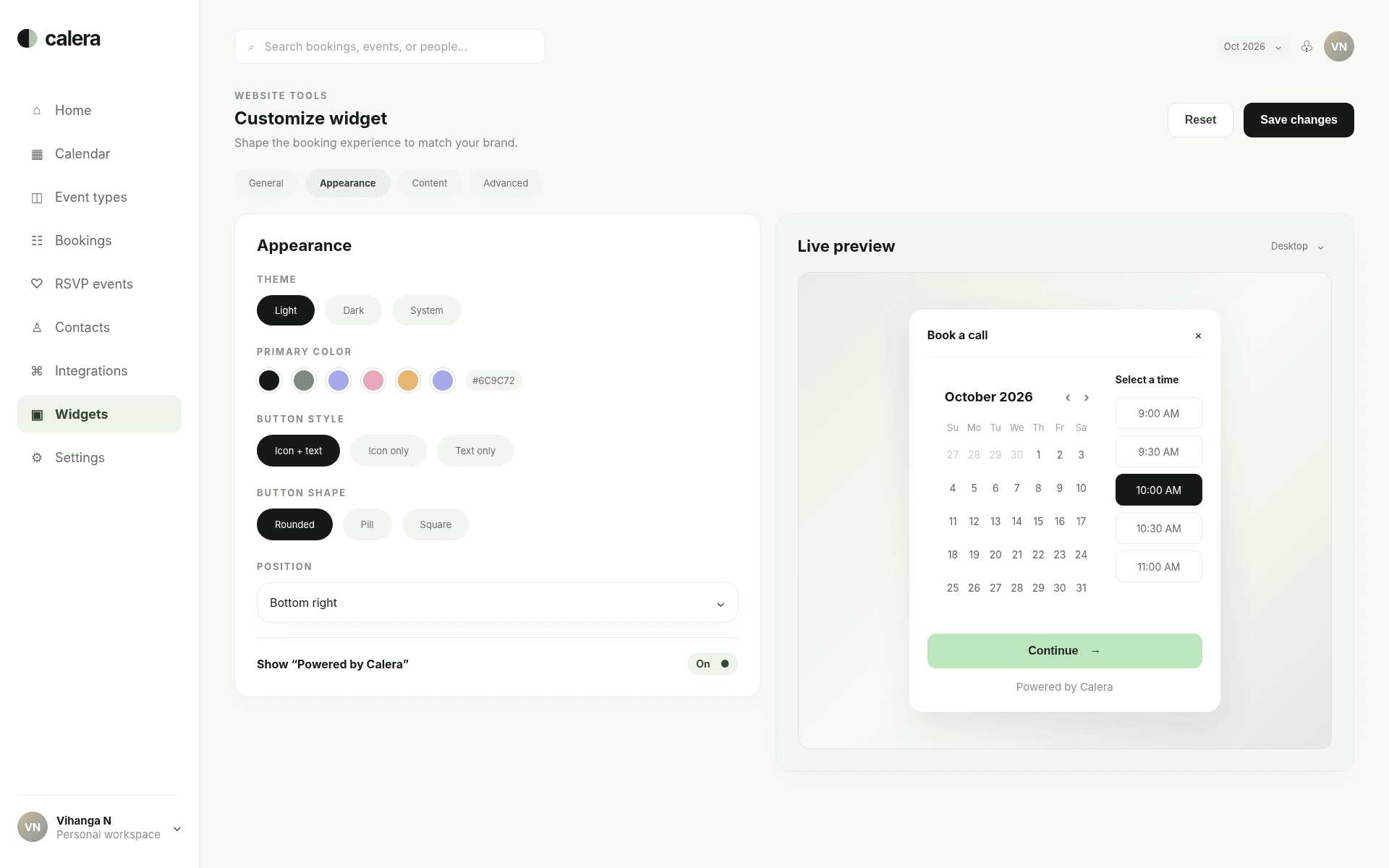
Customization was another important part of the experience. Rather than forcing every user into the same presentation, Calera allows booking widgets to be configured to fit different websites and visual identities.
A customizable booking widget
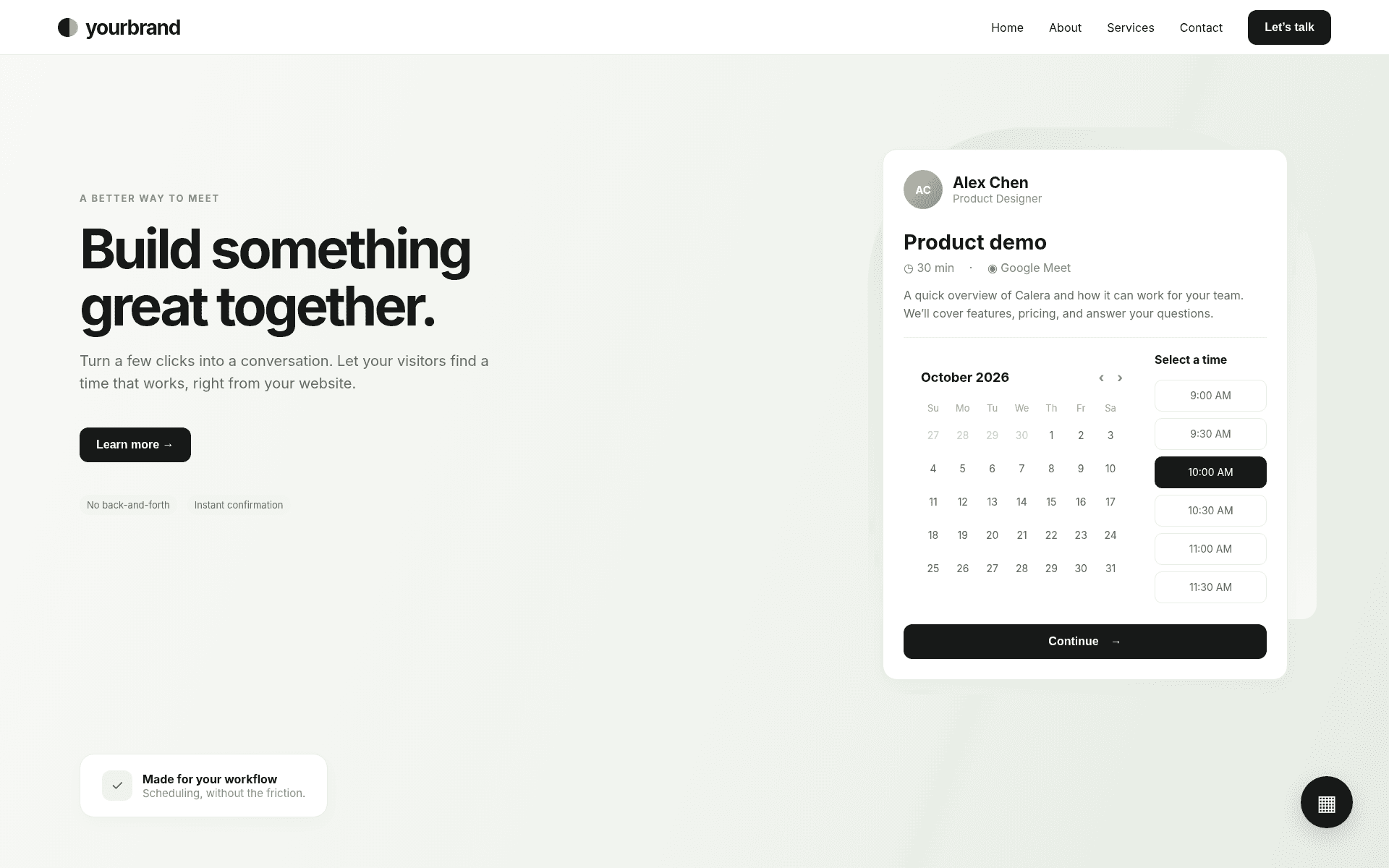
A booking experience shouldn't feel disconnected from the website it lives on. Calera's embeddable widget brings scheduling directly into an existing website, providing visitors with a convenient way to choose a date and time without leaving the page.
The widget is designed to be lightweight and self-contained, with customizable appearance options and an isolated rendering environment. Its interface supports date selection, available time slots, and booking creation, while maintaining the visual consistency of the host website.
Event registration & RSVP
Beyond appointment scheduling, I extended Calera with a dedicated RSVP feature for creating and sharing event pages.
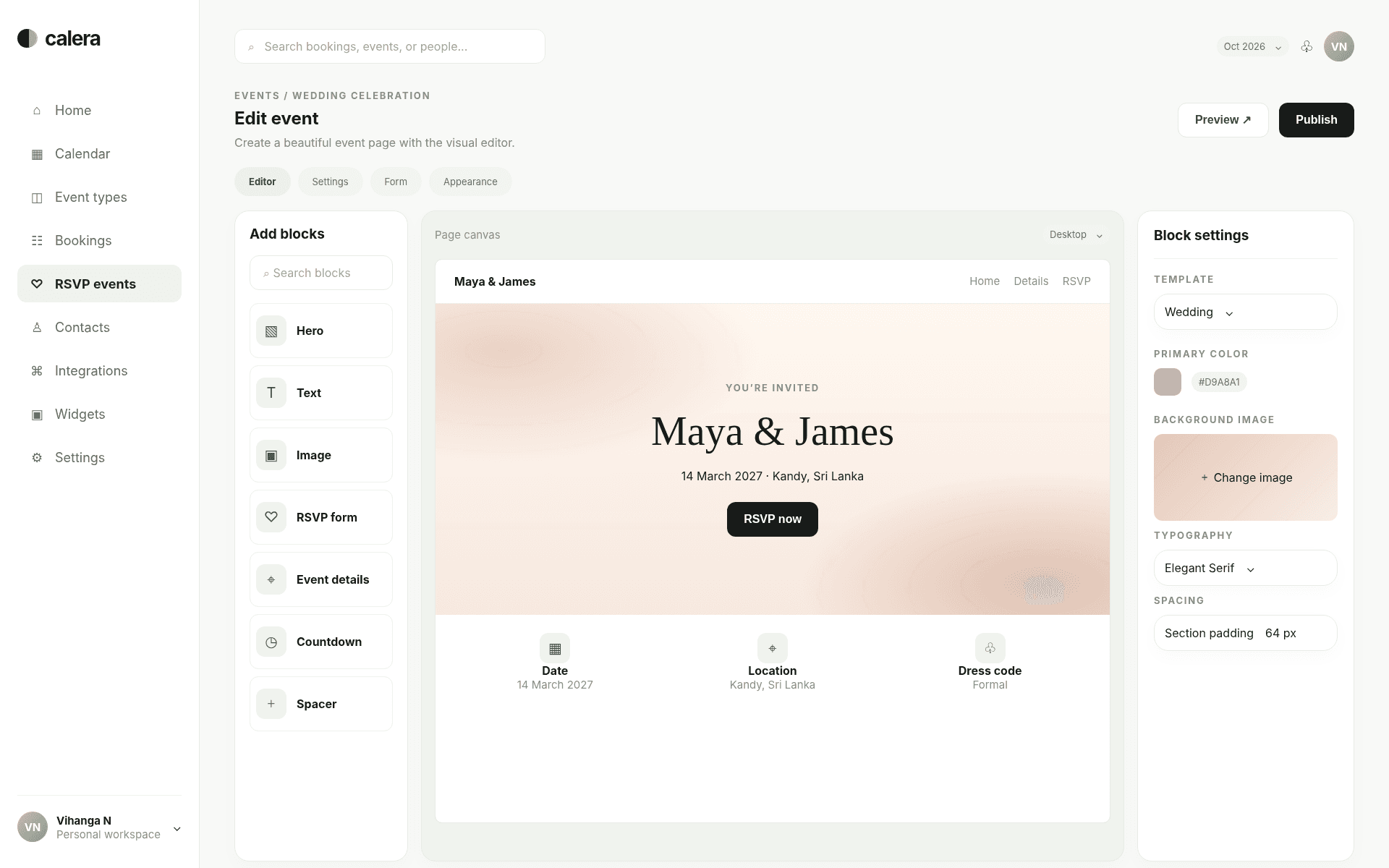
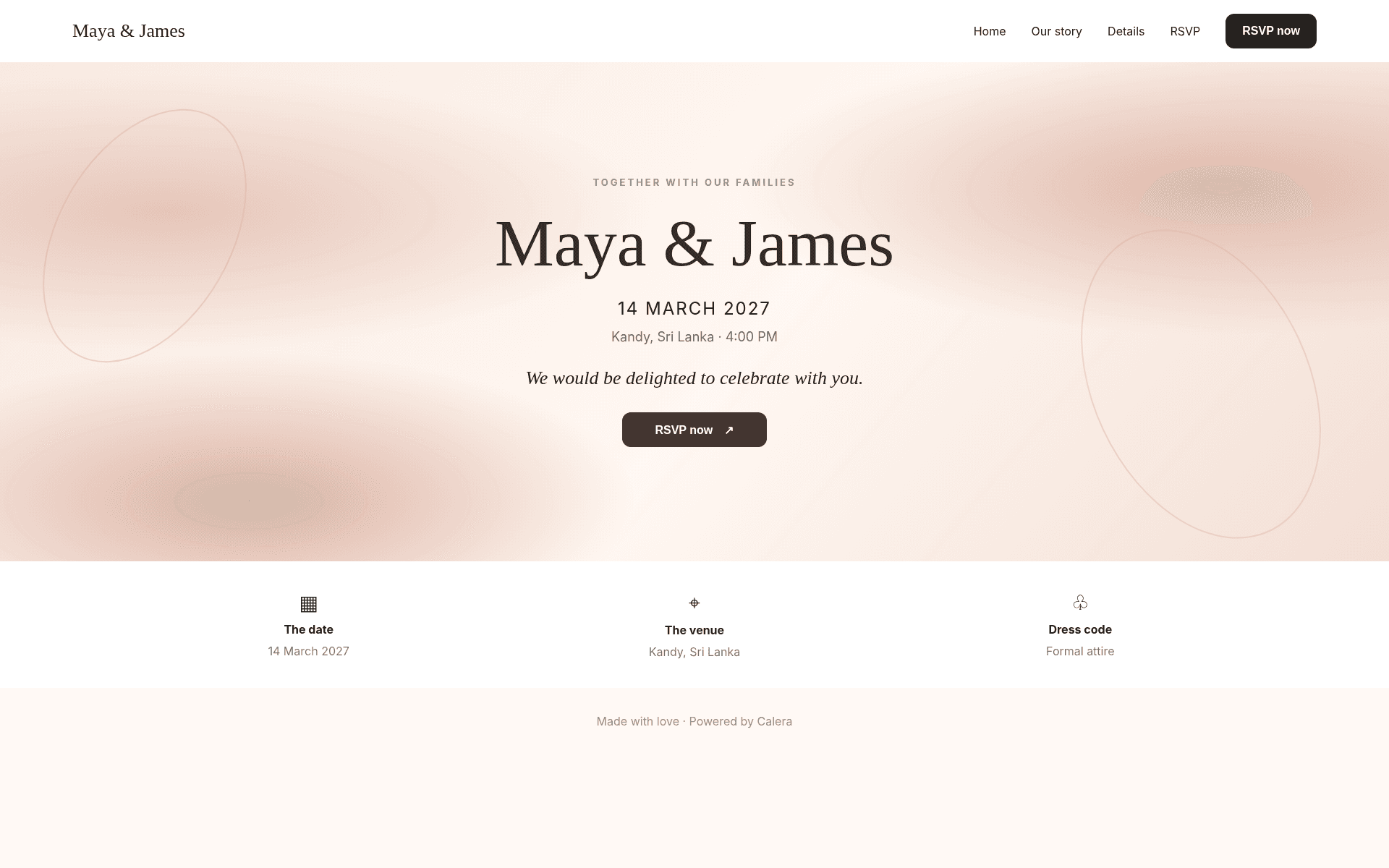
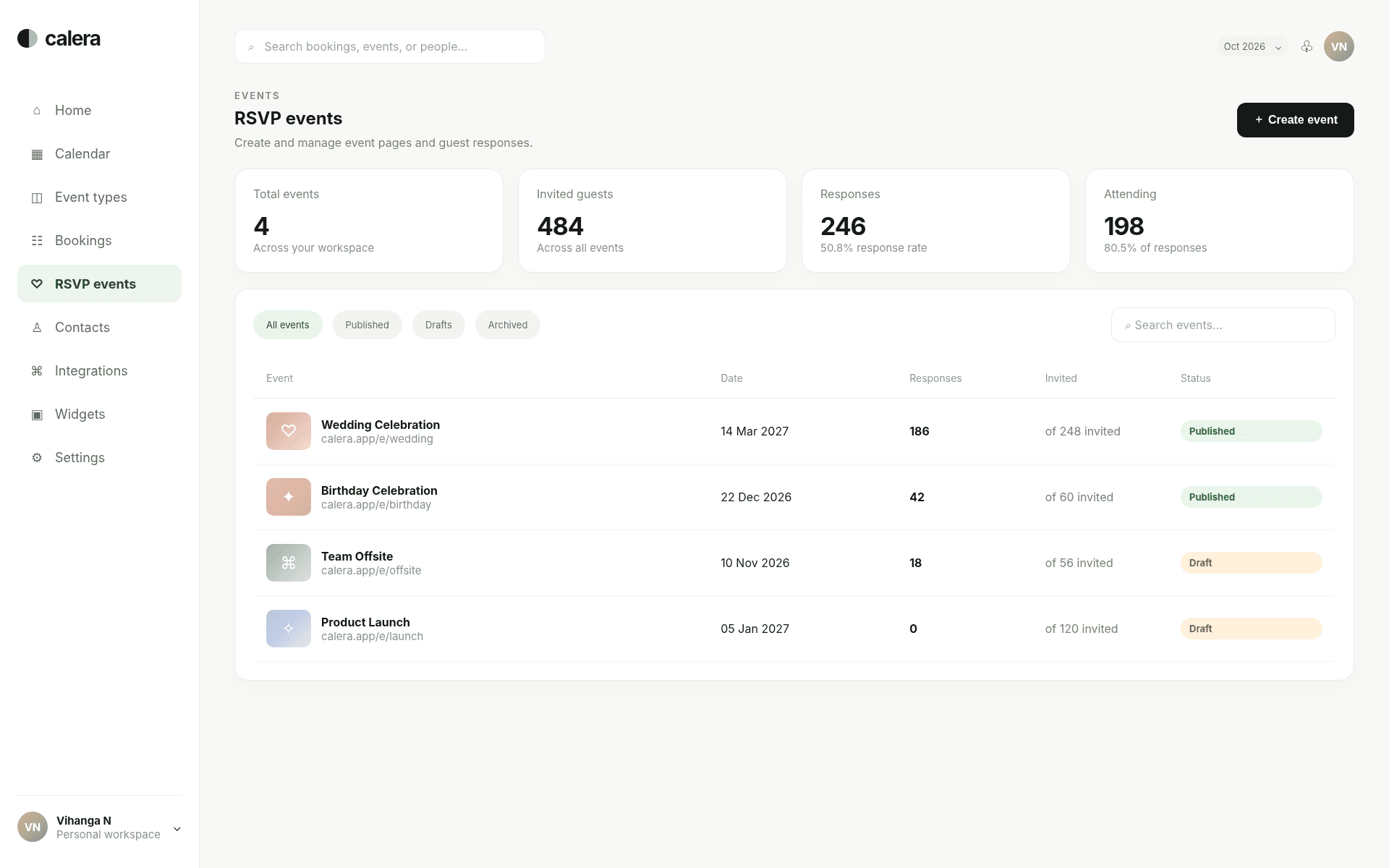
Organizers can build event pages using a visual editor, customize their appearance, preview layouts across desktop, tablet, and mobile, and publish a shareable page. Guests can respond to invitations through an email verification flow, while organizers manage responses from a centralized dashboard.
The aim was to give event organizers a more flexible way to create personalized invitations without needing to build a separate website.
Design system
I built Calera around a consistent design system to keep the experience cohesive as the product grew.
Reusable components, design tokens, and a shared set of interaction patterns help maintain consistency across the dashboard, booking pages, customization tools, and event editor. The interface uses a restrained visual language, thoughtful spacing, and clear typography to keep the product focused on its core tasks.
Radix UI provides accessible interface primitives, while SCSS and centralized design tokens give the visual system flexibility without sacrificing consistency. Light and dark themes are also part of the design direction.
Engineering the platform
Calera is built with Next.js and React, with Supabase providing the backend infrastructure for authentication and data management.
I used Zustand to manage client-side state and SCSS to build a maintainable styling architecture around reusable design tokens and components. The platform also integrates external services for calendar synchronization and transactional email notifications.
Particular attention went into the embeddable widget, public booking flows, and the separation between internal management interfaces and public-facing experiences. These parts need to work together reliably while remaining straightforward to use.
Key features
- Appointment scheduling and availability management
- Public booking pages and shareable booking links
- Booking creation, cancellation, and rescheduling
- Google Calendar integration
- Automated email notifications
- Customizable, embeddable booking widgets
- Event page creation and publishing
- Email-verified RSVP collection and management
- Responsive interfaces and light/dark theme support
The outcome
Calera is an exploration of how a scheduling product can combine practical functionality with a considered user experience. Building it meant working across product design, interface engineering, reusable component architecture, backend integration, and the details that connect them.
More than a calendar interface, Calera represents my approach to building products: start with a clear problem, establish a consistent design language, and engineer the experience until the interface and the underlying system feel like one coherent whole.